
- This event has passed.
Beyond Automation: Protecting Student Voice in the Age of AI with Daire Maria Ni Uanachain | AI & Equality Open Studio
April 16 @ 3:00 pm - 4:00 pm
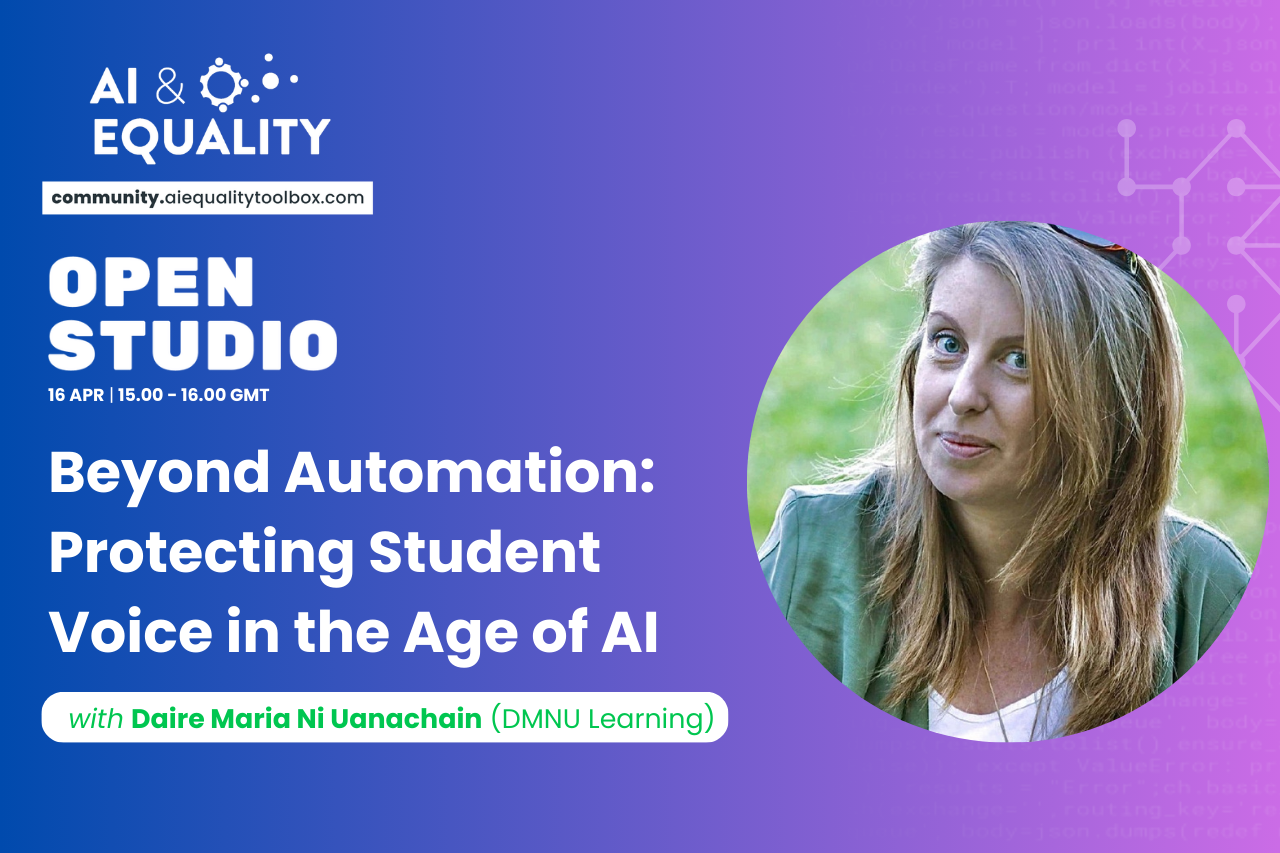
This Open Studio shares an in-progress Feminist AI–informed learning design framework that examines how power, authorship, and agency shift when Generative AI is introduced into secondary education. Drawing on classroom pilots, design research, and assessment tools such as a Student-Author Voice rubric, the work explores how LLMs can be integrated through co-creation and gradual immersion, rather than extraction or automation. The session foregrounds methodological tensions, ethical trade-offs, and policy-relevant questions emerging from real educational contexts.
🔗 More: Finding student-author voice: a rubric for assessment in the AI era.
Educational AI systems increasingly shape how knowledge is produced, evaluated, and legitimized—often without addressing whose voices are amplified or erased. This work matters because it applies Feminist AI principles to learning design, offering concrete strategies to safeguard student authorship, agency, and equity while aligning with emerging AI governance frameworks. It contributes practice-based evidence to policy discussions on responsible AI use in education beyond compliance checklists.