The Latin American AI & Equality Toolbox Introduction
In partnership with CENIA we’re working on delivering our methodology in Spanish with case studies from Latin America.
In partnership with CENIA we’re working on delivering our methodology in Spanish with case studies from Latin America.
This webinar will offer a deep dive into the Essential Questions of Data Discovery including a case study on the requirement for building effective TFGBV prevention datasets that include African languages.
In this webinar we dive into what inclusion and efficiency means ensuring the development or building of systems that don’t require technical expertise to interpret—ensuring that trust, oversight, and agency are accessible to all users. Whether a rural health worker, a student, or a community organizer, each person should be able to understand what a system is doing and why.
In this stage we examine the opportunity to reflect on how power operates in AI: Who gets to say if it works? Who can question it? Who can stop it?
We have partnered with the Chilean Centro Nacional de Inteligencia Artificial, CENIA, to co-construct a Latin American Spanish language version of the validated Toolbox, with use cases relevant to the regional experience. The partnership builds on the learnings from the workshop structure and outreach from the African Toolbox to do so.
In this final stage and webinar; we look at what true accountability means: planning for ongoing monitoring, shared governance, and the possibility of “no.” We will explore what it means for systems to be responsive—not just to data—but to dignity.
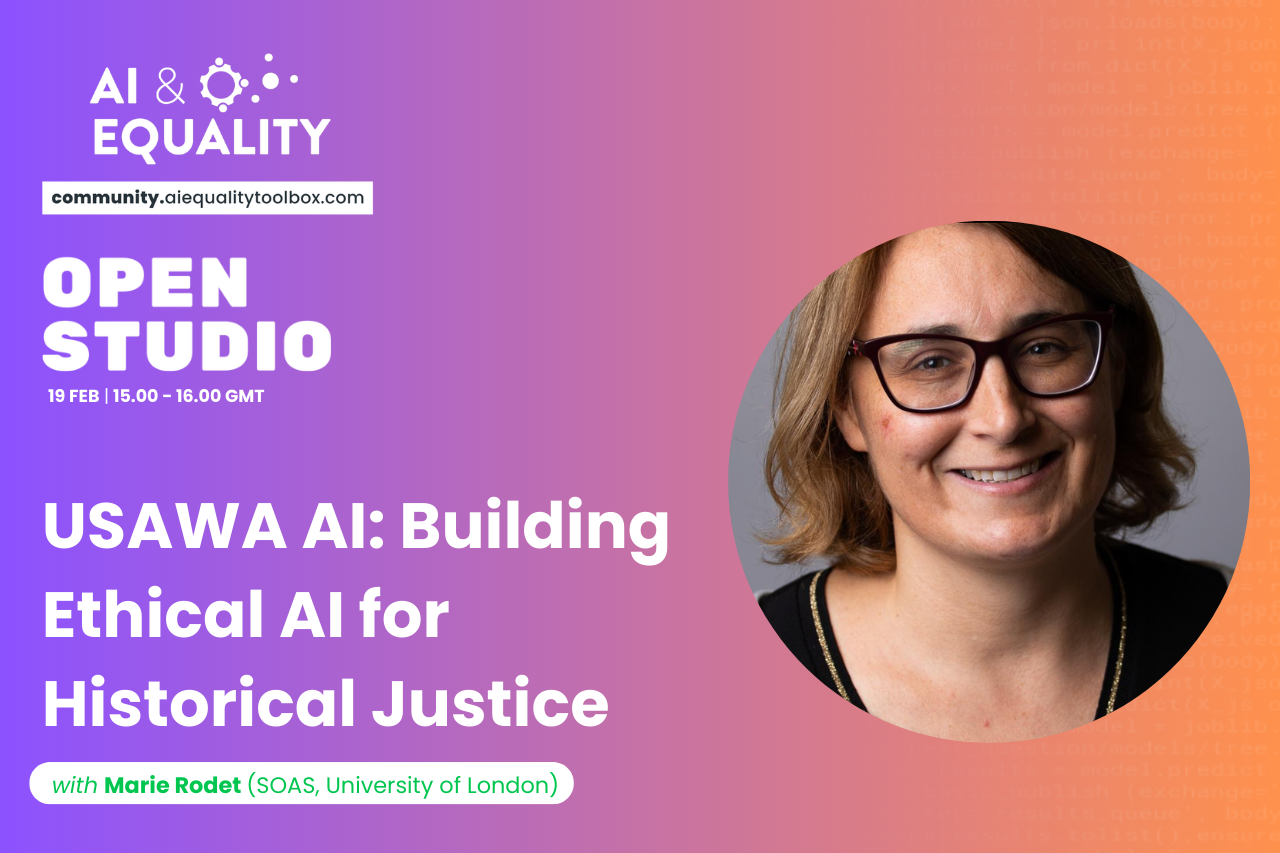
USAWA AI is an interactive, educational experience built around an AI avatar that draws on carefully mediated testimony from West African survivors of domestic servitude. Rather than recreating historical scenes or offering total explanations, the AI is designed to speak partially and cautiously, reflecting the ethical limits of testimony and the sensitivity of slavery.
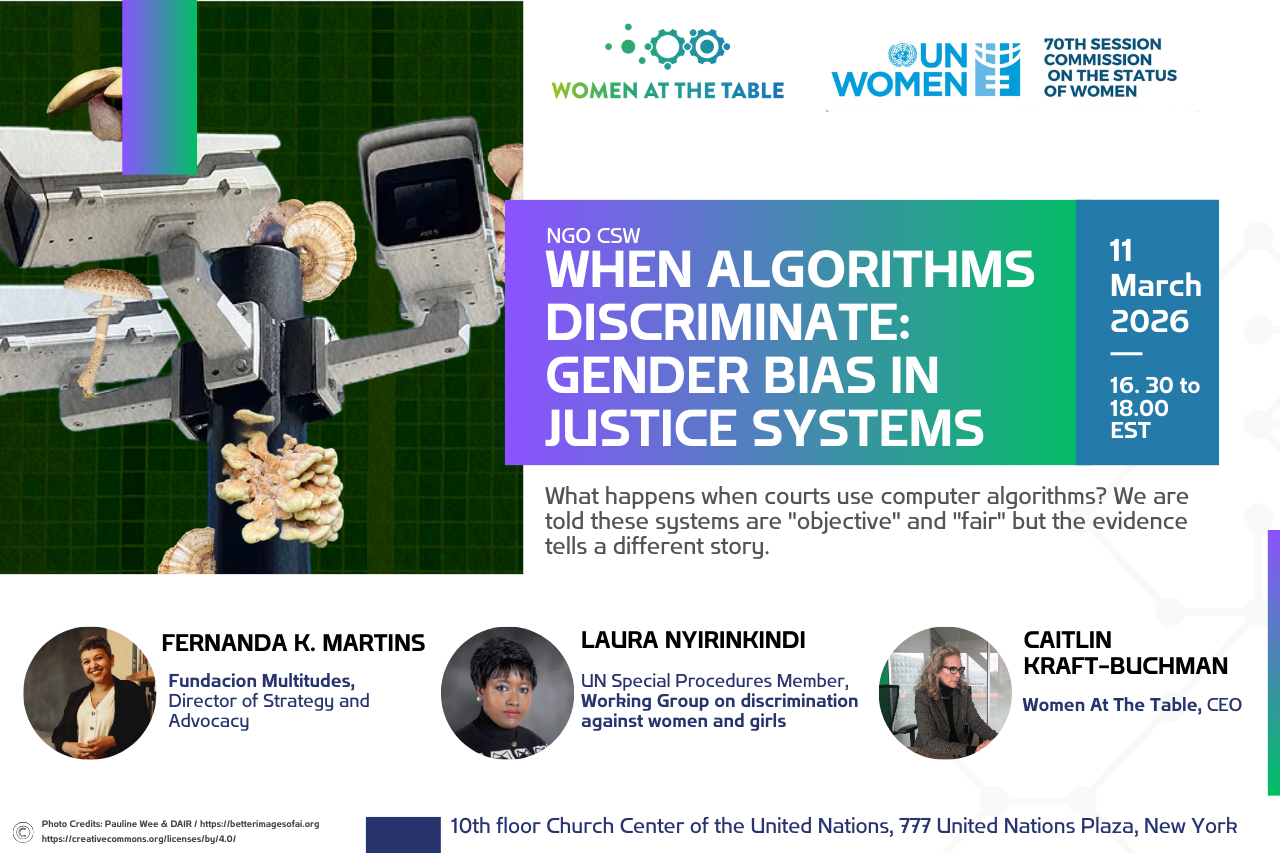
An In Depth Discussion: What happens when courts replace judges with computer algorithms? We are told these systems are "objective" and "fair" but the evidence tells a different story. From bail decisions to sentencing, algorithms are making life-changing choices about women based on biased data and male-centered assumptions.
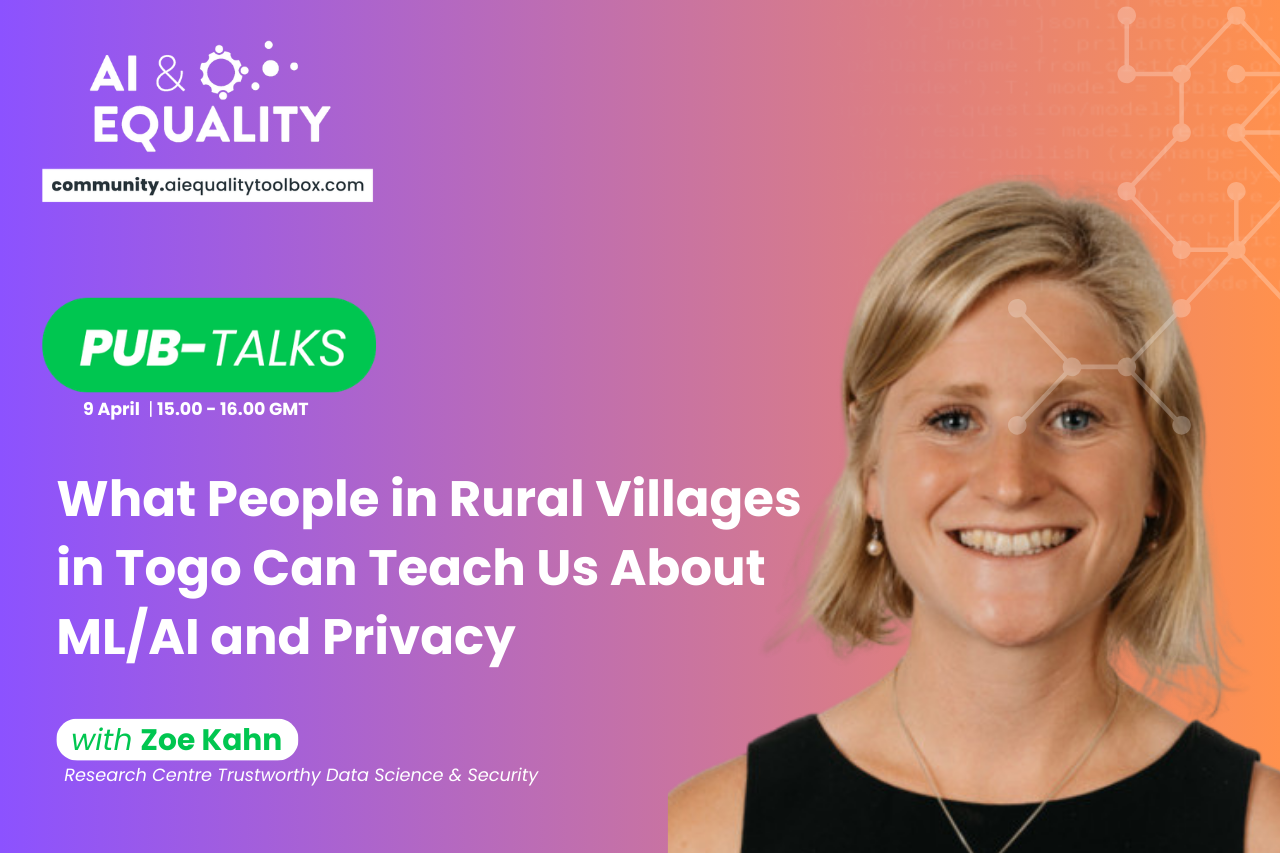
How do people living in rural villages in Togo feel about the use of emerging technologies in humanitarian aid? This work reports on the privacy concerns of people living in rural Togo related to the use of machine learning models trained on phone data to allocate cash assistance to people living in poverty, highlighting an innovative method -- sociotechnical visuals -- to explain complex technical concepts so that people living in rural villages with limited literacy, formal education, and familiarity with digital tech could provide meaningful input.
On May 22, The AI & Equality Initiative will host its first Festival of Ideas: a global, one-day online gathering designed to reframe the conversation around artificial intelligence — not as a technical frontier to be managed, but as a political reality to be shaped.