AI and Equality

Event Series The African AI & Equality Toolbox

The African AI & Equality Toolbox Webinar 2: System Requirements

In this webinar we look at how requirement setting should function as a bridge between vision and use: Aligning system features with cultural context, infrastructure gaps, and social expectations; Identifying constraints early on—connectivity, literacy, consent, power dynamics—and building around them and making conscious trade-offs between speed, scale, and equity. 
Event Series The African AI & Equality Toolbox

The African AI & Equality Toolbox Webinar 4: Model Selection

In this webinar we dive into what inclusion and efficiency means ensuring the development or building of systems that don’t require technical expertise to interpret—ensuring that trust, oversight, and agency are accessible to all users. Whether a rural health worker, a student, or a community organizer, each person should be able to understand what a system is doing and why.

Event Series LAC AI & Equality Toolbox

The Latin American AI & Equality Toolbox Launch

We have partnered with the Chilean Centro Nacional de Inteligencia Artificial, CENIA,  to co-construct a Latin American Spanish language version of the validated Toolbox, with use cases relevant to the regional experience. The partnership builds on the learnings from the workshop structure and outreach from the African Toolbox to do so.

Event Series AI & Equality Community | Events

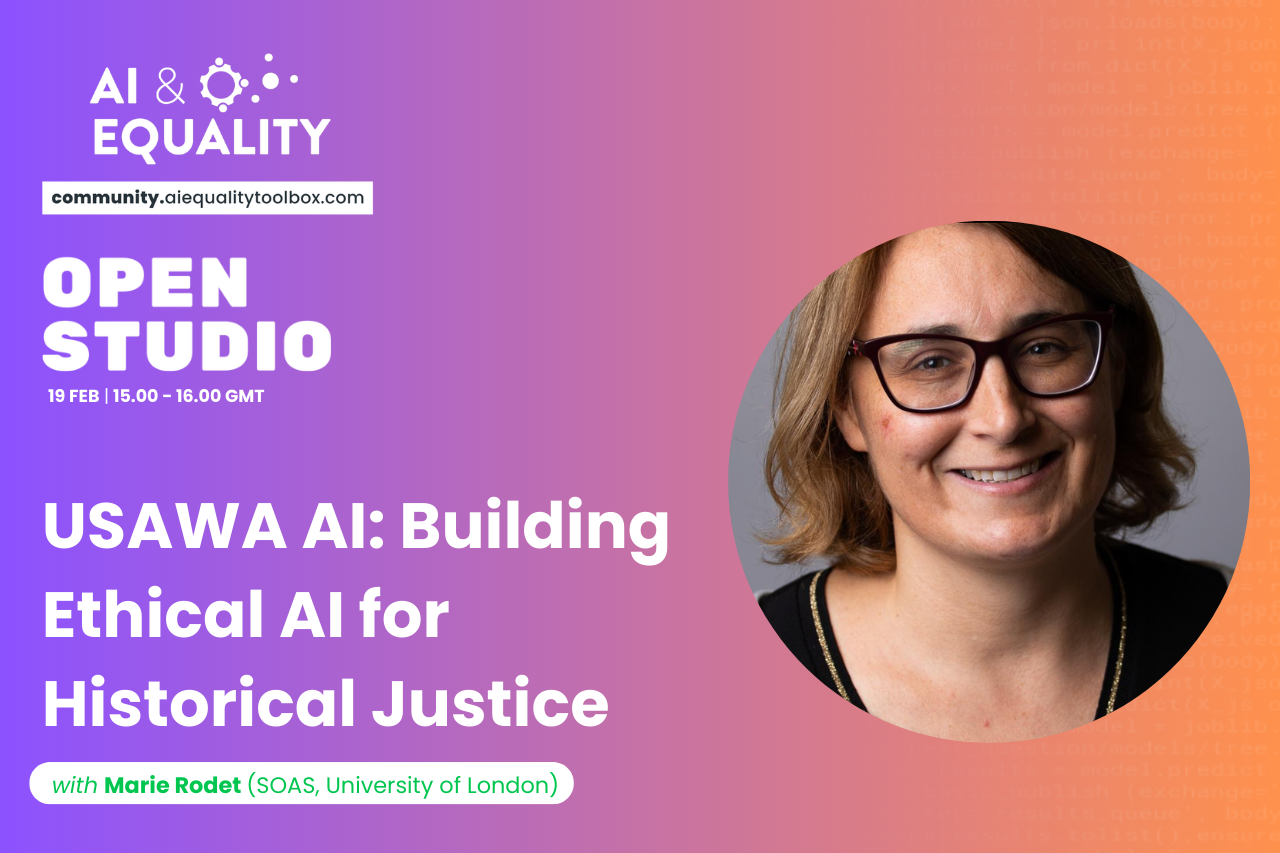
USAWA AI: Building Ethical AI for Historical Justice with Marie Rodet | AI & Equality Open Studio

USAWA AI is an interactive, educational experience built around an AI avatar that draws on carefully mediated testimony from West African survivors of domestic servitude. Rather than recreating historical scenes or offering total explanations, the AI is designed to speak partially and cautiously, reflecting the ethical limits of testimony and the sensitivity of slavery.

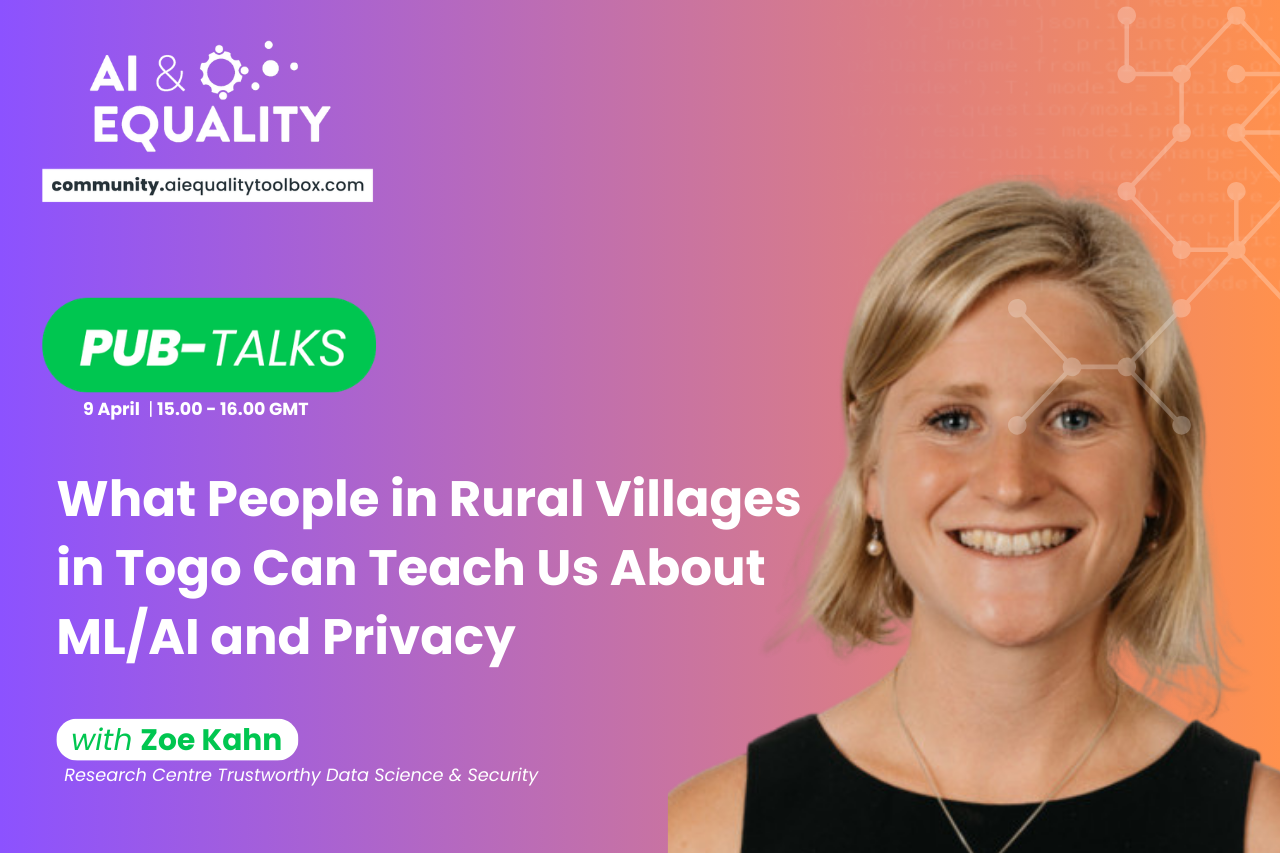
What People in Rural Villages in Togo Can Teach Us About ML/AI and Privacy with Zoe Kahn | AI & Equality Pub-Talk

How do people living in rural villages in Togo feel about the use of emerging technologies in humanitarian aid? This work reports on the privacy concerns of people living in rural Togo related to the use of machine learning models trained on phone data to allocate cash assistance to people living in poverty, highlighting an innovative method -- sociotechnical visuals -- to explain complex technical concepts so that people living in rural villages with limited literacy, formal education, and familiarity with digital tech could provide meaningful input.