The HRIA Workbook
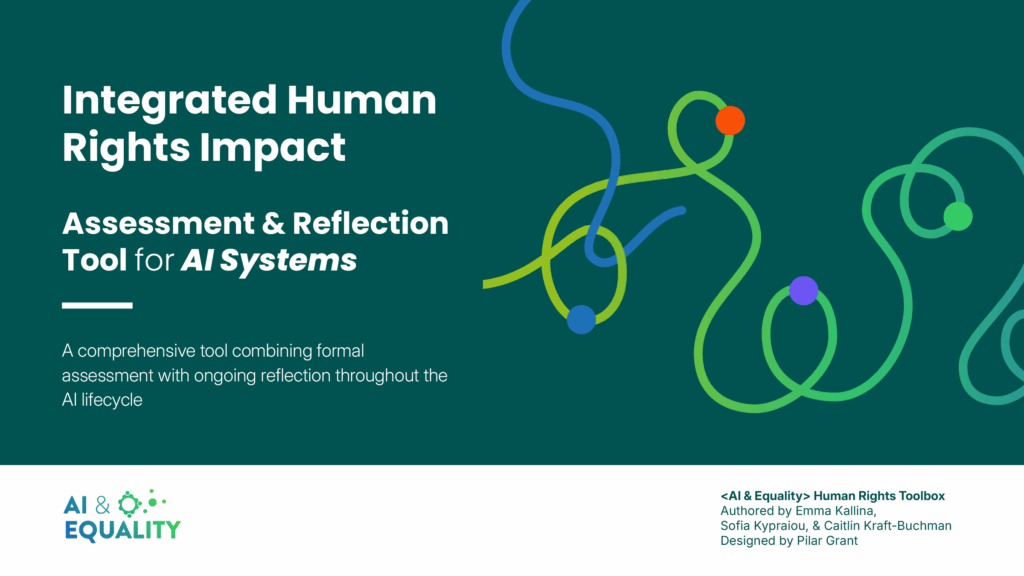
A working document for assessing human rights risk in AI systems, stage by stage, from first objective to post-deployment monitoring.
Built to put HUDERIA to work
The Council of Europe’s HUDERIA sets the expectation: AI systems should be assessed for their impact on human rights, democracy and the rule of law across their lifecycle. It is a methodology, not a worksheet.
As active Observers to the Council of Europe committee guiding HUDERIA implementation, we designed this Workbook as an actionable companion to the framework, a usable instrument teams can complete, developed independently of the Council of Europe. It also produces the documented due-diligence record that obligations like the EU AI Act increasingly require.
Two tools in one
Ongoing reflection tool.
Stage-specific questions for planning meetings, design sprints and team check-ins, so human rights thinking enters at each stage rather than as an afterthought.
Formal assessment documentation.
Structured sections you complete for the record, building a permanent account of your human rights due diligence as you go.
Six stages, following the AI lifecycle
From first intention to long-term accountability, rights considerations enter at each step, not bolted on at the end.
1. Objective & Team Composition
Getting clear on what your ultimate goal is, and building a multidisciplinary team diverse enough to see the risks and the possibilities.
2.System Requirements
Setting requirements with the communities the tool will affect, and surfacing the trade-offs early.
3. Data Discovery
Asking who is in the data, who is missing, and what history it carries.
4. Model Selection
Choosing and justifying the model on an ecosystem of values, not performance alone.
5. Testing & Validation
Measuring performance across groups, not just in aggregate.
6. Deployment & Monitoring
Deploying with sign-off, recourse and ongoing audit in place.
Three ways to use it
Progressive — work through each stage as you build.
Milestone-based — complete formal sections at project gates.
Comprehensive — run the whole tool at set points, or retroactively on a system already in use. It adapts from a small pilot to a national rollout.