A small organisation working at an unusual altitude: building the tools for human rights-based AI, and getting into the rooms where the rules for AI are written.
From the start, the bet has been that you cannot fix AI from the outside.
You have to do both things at once, build instruments people can actually use, and be present where the standards, treaties and policies are decided.
Over the last two years that bet has paid off at a scale that outsizes the organisation behind it.
The AI & Equality method, developed with the UN Office of the High Commissioner for Human Rights and EPFL, grew into a working toolbox: a human rights impact assessment teams complete stage by stage, a course carrying a Sorbonne Centre for AI certificate, and regional toolboxes led by partners on the ground, the African Toolbox with the African Centre for Technology Studies (2025), and the Latin American Toolbox with CENIA and the University of Chile.
In 2026 came the research edge: HumRights-Bench, the first expert-validated benchmark for whether AI models can reason about human rights at all, premiered at a Human Rights Council side event, and accepted at CS&Law 2026 and the AI for Law workshop at ICML.
Shaping the standards
In parallel, we took the work into the institutions writing the rules. As Co-Chair of the Gender Advisory Board of the UN CSTD, we brought a gender-responsive approach to the 28th session in Geneva (2025), and served on the ten-member Gender and AI Advisory Group to the AI Action Summit for the French Ministry of Foreign Affairs (Paris, 2025).
We carried the same argument to AI for Good with UNECE on equitable AI standards, to the Internet Governance Forum in Norway on human rights in AI risk management, to WSIS on embedding human rights in AI standards, and to the AI Impact Summit in Delhi (2026).
In 2026 we became an Observer to the Council of Europe’s CDNet committee, which guides implementation of HUDERIA, the framework HumRights-Bench and the HRIA Workbook are built to serve, and stepped up as High-Level Facilitators for the WSIS+20 process, chairing four events.
Putting rights into practice, and into procurement
The work also went operational. We ran AI lifecycle and procurement workshops for the City of Geneva, and at UNESCO’s Global Forum on AI in the public sector made the case for rights-centred AI procurement, “From Policy to Practice.” That opened a research stream and a peer-reviewed paper, “It’s Just a Wild, Wild West”: Harnessing Public Procurement as an AI Governance Mechanism, published at CHI 2026 with an honourable mention, drawing on interviews with public-sector buyers and providers across the UK and EU. It lands the same insight that runs through everything: most people are not building AI, they are buying it, and they need to know what they are bringing into a clinic, a school, a courtroom.
At CSW: from the digital divide to access to justice
Across two Commissions on the Status of Women, we moved with the agenda. At CSW69 / Beijing+30 (2025) we convened a side event on gender equality in the digital age with ITU, WSIS, UN Women, FAO and the governments of the Netherlands and Norway.
At CSW70 (2026), whose theme was access to justice, we wrote the expert paper Gender Bias in Judicial Algorithms as a member of the CSW Expert Group, and held a side event on judicial algorithms with CEDAW and the UN Working Group on Discrimination Against Women and Girls.
In the rooms that set the tone
The reach ran wider still: a keynote to Soroptimist International in Krakow, AI Belongs to All of Us; a panel for Speakers of Parliament on the digital future, presenting our Gender Responsive Assemblies Toolkit; the Feminist Foreign Policy Ministerial in Paris on a Women, Peace and Security network; the International Gender Champions tenth anniversary at the UN; the UN Forum on Business and Human Rights on safeguarding rights in the age of AI; and the inaugural AI & Equality Festival of Ideas, a free global gathering with partners on five continents.
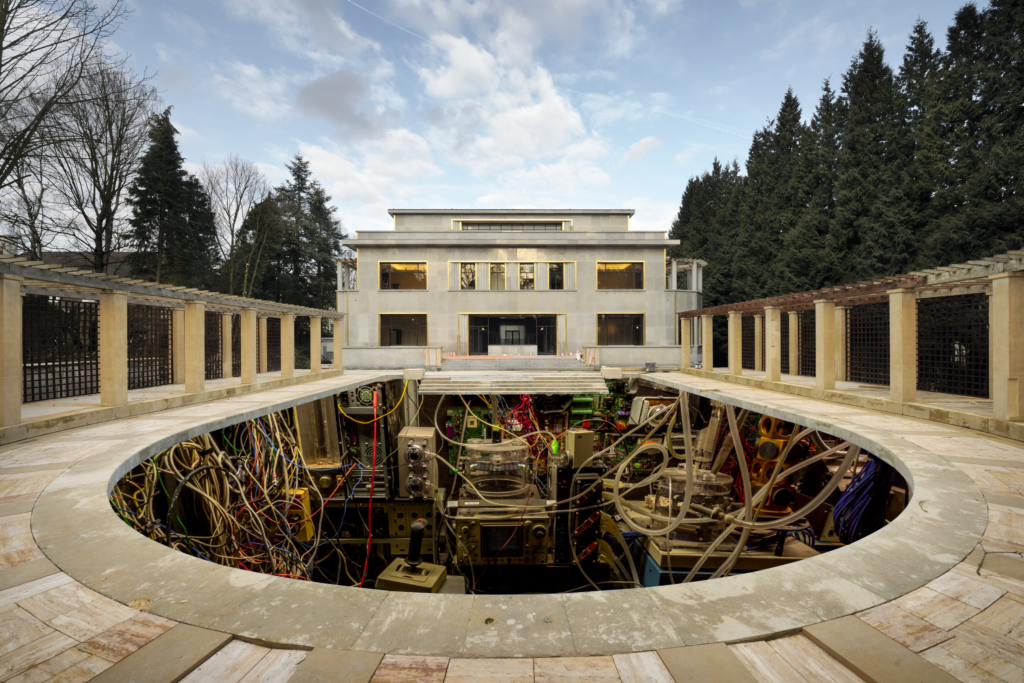
ulysse.gks & FARI | Betterimagesofai.org
On the horizon
Two side events at WSIS, presentations at AI for Good, including a Women Ministers event, and at the Global Dialogue on AI Governance. The pattern holds, tools and standards, practice and policy, moving together.